


Food-Grade Silicone Molds: Is Silicone Safe for Food?
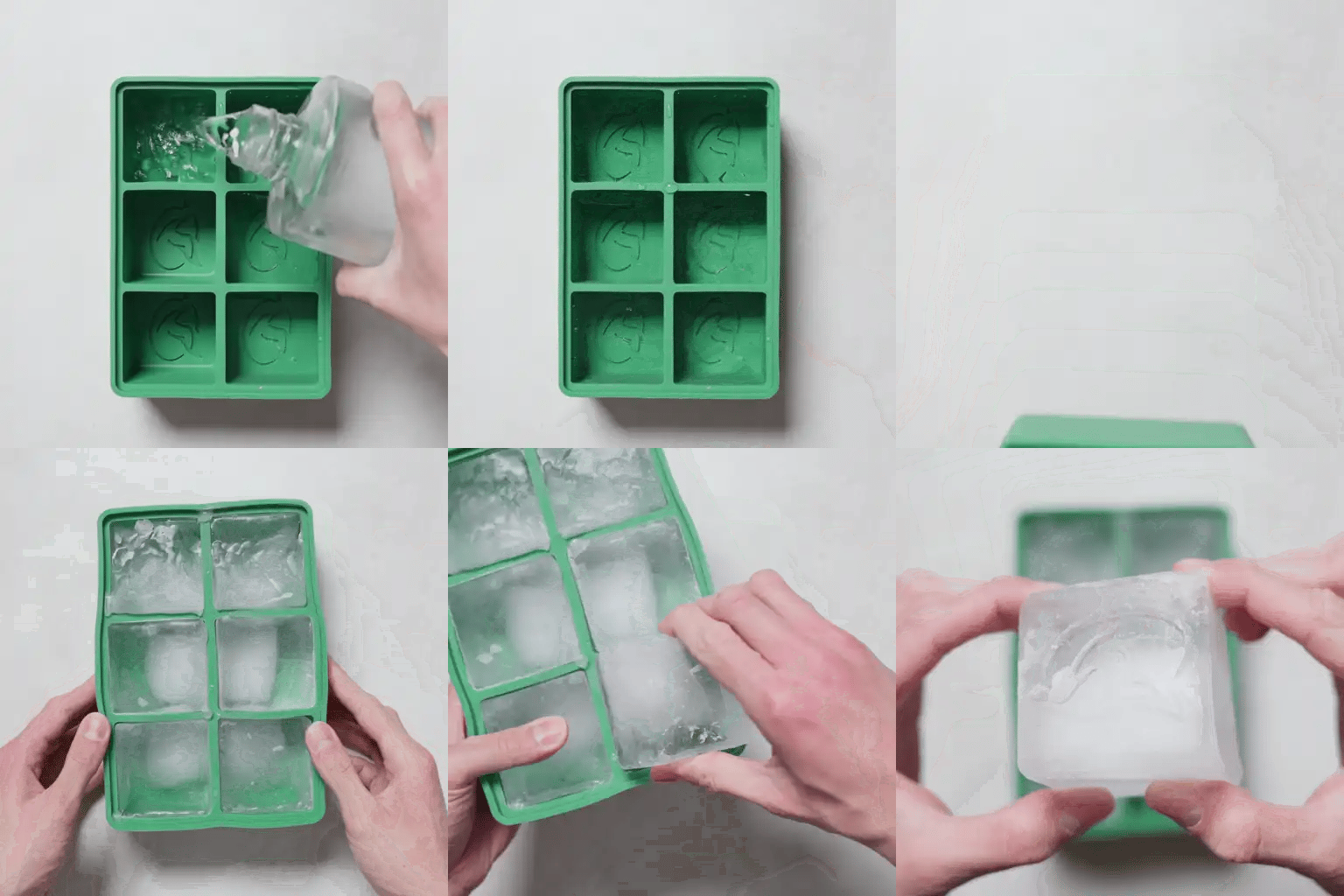
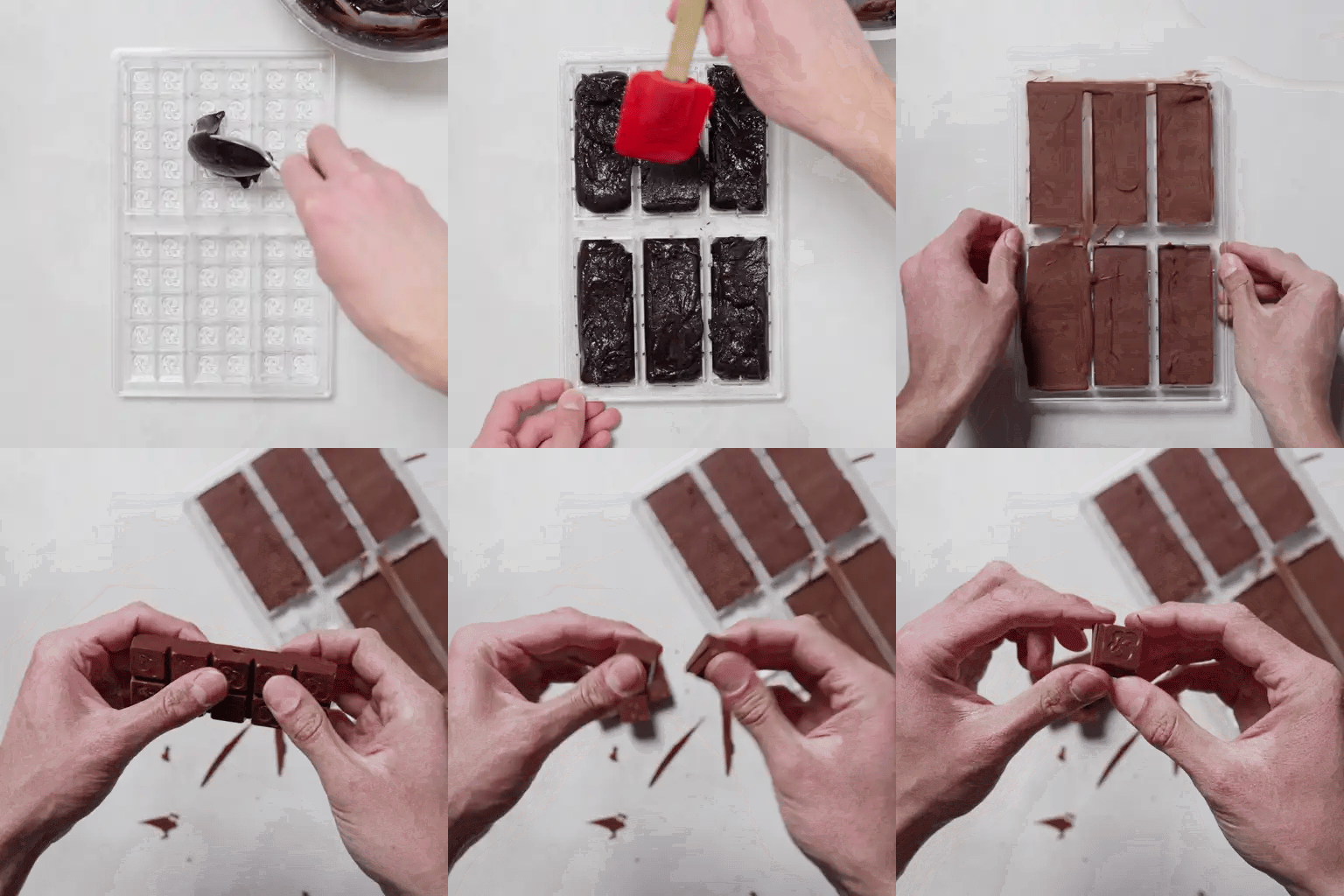
You have seen silicone molds in kitchen supply stores on baking blogs and in commercial candy kitchens. They bend, twist and pop out chocolates, gummies and ice cubes with ease. But the question is, is silicone safe for food?
That question stops many home bakers and small brand owners from buying their first mold. Confusing labels do not help. Some products say “100% silicone.” Others say “food-grade” or “BPA free.” A few carry no information at all.
This guide gives you a clear answer. You will learn what food-grade silicone actually means, how certifications work and exactly how to verify a mold’s safety before you put your food in it.

What Does Food-Grade Silicone Mean?
Food-grade silicone is a type of synthetic rubber approved for direct contact with food. Regulatory bodies like the U.S. Food and Drug Administration (FDA) and European Union authorities have tested it against strict safety standards . A material receives “food-grade” status only when it shows no risk of transferring harmful chemicals to food under normal use conditions.
For a silicone mold to qualify as food-grade, the finished product must pass migration tests. These tests simulate real world use. Heat, cold, acidity and fat content. Scientists measure whether any molecules move from the silicone into food. Certified food-grade silicone keeps migration far below legal limits.
What Food-Grade Silicone Is Made Of
Silicone starts with silica, a natural compound found in sand and quartz. Manufacturers extract silicon from silica, then combine it with carbon, hydrogen, and oxygen. The result is a polymer chain: a long, repeating molecular structure which gives silicone its rubbery feel and heat resistance.
The production process uses no petroleum based materials. This sets silicone apart from most plastics. Food-grade silicone contains no fillers, no plasticizers, and no chemical additives which could leach into food . The highest quality versions use platinum as a catalyst, leaving no toxic residues behind.

Is Silicone Safe for Food? What Research Actually Shows
FDA and International Consensus
The FDA approved silicone for food contact applications in the 1960s. Since then, multiple studies have confirmed its safety. The European Food Safety Authority (EFSA) and Japan’s Ministry of Health, Labour and Welfare also classify properly manufactured silicone as safe for food contact.
Research shows that certified food-grade silicone does not release estrogenic or androgenic chemicals. This contrasts sharply with many plastics, including some labeled BPA free. A 2014 study in the journal Chemosphere tested silicone baking molds and found no detectable endocrine disrupting activity under normal use.
Known Concerns: Siloxanes, Heat, and Acidic Foods
Some consumers worry about siloxanes, a group of chemicals used in silicone production. Research shows that low molecular weight siloxanes can migrate from low grade silicone under extreme conditions. But certified food-grade silicone from reputable manufacturers shows minimal migration at temperatures below 200°C (392°F).
Two factors increase migration risk. Very high heat and very acidic foods. Using a silicone mold as a roasting pan at 250°C (482°F) with lemon juice or vinegar creates a more demanding test than normal baking or candy making. For chocolates, gummies, ice and standard baking, certified food-grade silicone poses no known health risk.
Is All Silicone Food-Safe?
No. This point matters more than any other in this guide. The word “silicone” describes a family of materials, not a safety standard. Some silicones work well in industrial gaskets and engine seals but have no place near food.
Platinum-Cured vs. Tin-Cured Silicone
Platinum-cured silicone uses platinum as a catalyst during manufacturing. The platinum does not remain in the final product. It simply starts a chemical reaction which links polymer chains together. The result is a clean, inert material with no byproducts. Most food-grade silicone is platinum-cured.
Tin-cured silicone uses tin-based catalysts. This process costs less, but it leaves trace amounts of tin and other byproducts in the material. Tin-cured silicone works fine for industrial applications like gaskets or vibration dampeners. It should not contact food. If a seller cannot tell you whether their molds are platinum-cured, look elsewhere.
Why “100% Silicone” Doesn’t Mean Food-Safe
A label which says “100% silicone” only tells you the product contains no other materials like plastic or rubber. It does not tell you about the curing process , purity or certification status. A mold could be 100% tin cured silicone with residual byproducts and no certification. That product is 100% silicone but not food safe.
Reputable manufacturers provide third-party test reports and certification documentation. “100% silicone” printed on a package is marketing language. Not a safety guarantee.

Food-grade Silicone vs Regular Silicone: The Real Differences
Composition and Purity
Food-grade silicone uses higher purity raw materials. Manufacturers select silica sources with fewer impurities. They control the production environment to prevent contamination. Regular industrial silicone may contain recycled material, fillers like calcium carbonate, or processing aids which are not food safe.
The difference shows up in lab tests. food-grade silicone passes migration limits for heavy metals, volatile organic compounds and unreacted monomers. Industrial grade silicone often fails these tests.
Certification and Testing
Food-grade silicone comes with documentation. A legitimate manufacturer provides a certificate of compliance to FDA 21 CFR 177.2600 or LFGB standards. They can name the independent lab which performed migration testing. They specify the temperature range and food types the product safely contacts.
Regular silicone has no such documentation. A seller might claim “food safe” verbally, but they cannot produce test reports. Without paper proof, assume the product is not certified.
Performance and Appearance
Food-grade silicone typically feels smoother and more uniform. Industrial silicone may have a rough texture, visible specks, or inconsistent color. The difference comes from higher quality control standards.
Food-grade molds release food more cleanly because the surface chemistry is engineered for low friction. Industrial silicone can stick to chocolate or candy, harming your production. The price difference between grades reflects real performance advantages. Not just marketing.
Certifications That Prove a Mold Is Truly Food Safe
FDA 21 CFR 177.2600 (United States)
This regulation specifies the requirements for rubber articles intended for repeated use in food contact. For silicone, the key tests measure extractable substances in water, alcohol and food oils. The limits are strict: total extractives cannot exceed certain low levels depending on the solvent.
A mold which complies with 21 CFR 177.2600 has passed these extraction tests. The manufacturer’s certificate of compliance should reference this exact code. Vague claims like “FDA approved silicone” without the CFR number are not sufficient proof.
LFGB (Germany/European Union)
The LFGB (Lebensmittel und Futtermittelgesetzbuch) is Germany’s food and feed code, widely accepted throughout Europe and many other countries. LFGB testing is more rigorous than FDA standards in some areas. It includes sensory tests for taste and odor transfer. A certified LFGB silicone mold will not make your chocolates smell or taste like rubber.
LFGB certification also tests for specific chemicals like certain phthalates and heavy metals at lower detection limits. For buyers in premium markets or anyone making products for sensitive consumers, LFGB is the gold standard.
Other Standards Worth Knowing
France’s DGCCRF (Direction Générale de la Concurrence, de la Consommation et de la Répression des Fraudes) maintains requirements similar to LFGB. China’s GB 4806 series covers food contact silicone. Japan’s Food Sanitation Law includes specifications for silicone utensils.
For most buyers in North America and Europe, FDA and LFGB certifications cover your needs. If you export to multiple countries, look for manufacturers who test to multiple standards simultaneously.
How to Tell If Your Silicone Mold Is Food-Grade
A trustworthy product shows these items on its label or specification sheet
- Explicit statement of “food-grade” or “food safe”
- Certification reference (FDA 21 CFR 177.2600 or LFGB)
- Temperature range (example: -40°C to +230°C)
- Manufacturer name and contact information
- Country of origin
Absence of any of these items is a warning sign. A blank package with only “silicone mold” printed on it offers no safety assurance.
At Home Checks (and Their Limits)
You can perform simple checks but they are not definitive. A pinch and twist test: food-grade silicone typically shows no white stress marks when folded tightly. A burn test: hold a small piece with tweezers over a lighter flame. Pure silicone burns to a white, powdery ash. Low grade material with fillers burns black and smells like burning plastic.
These tests give clues, but they cannot prove certification. A product could pass both tests and still fail chemical migration standards. Use home checks as filters to reject obvious fakes, not as final approval.
Buying Food-grade Silicone Molds: A Buyer’s Checklist
Use this checklist when shopping for silicone molds for chocolate, candy, or ice.
- Check certification documents. Ask for the FDA or LFGB certificate of compliance. A legitimate supplier provides this without hesitation.
- Confirm platinum cure. Ask directly “Is this mold made from platinum-cured silicone?” Get the answer in writing.
- Verify temperature rating. Look for a range which covers your use case. Freezer to chocolate tempering requires at least -20°C to +50°C. Oven use requires +230°C.
- Check for filler materials. Some sellers add calcium carbonate or other fillers to reduce cost. Ask for purity documentation.
- Inspect a sample before bulk purchase. For commercial buyers, request a physical sample. Look for uniform color, smooth finish. And no smell.
- Read negative reviews. Customer complaints about taste transfer or strange smells often indicate low-grade material.
- For custom production, such as producing custom ice cube molds, working directly with a manufacturer gives you control over material quality. You can specify FDA or LFGB certification in your purchase agreement and request batch-level test reports.
FAQs About Food-Grade Silicone and Food Safety
Does food-grade silicone leach chemicals into food?
Certified food-grade silicone does not leach harmful chemicals at normal cooking temperatures. Migration becomes a concern only above roughly 200°C/392°F or with uncertified or low grade silicone.
What temperature is food-grade silicone safe to?
Most certified food-grade silicone is stable from -40°C to +230°C (-40°F to +446°F). Confirm the specific temperature rating on the manufacturer’s spec sheet before oven or torch use.
Is silicone safer than plastic for food?
Yes. food-grade silicone contains no BPA, BPS, phthalates or lead. And it does not shed microplastics. Many experts consider it a safer reusable alternative to single use plastics.
Does “100% silicone” mean food safe?
No. “100% silicone” means the product is pure silicone, but it does not confirm food contact certification. Only FDA or LFGB certification confirms food safety.
Can I use a silicone mold for both chocolate and ice?
Yes. A certified food-grade mold rated for the full temperature range works perfectly for both applications. A single certified mold can move between freezer and chocolate tempering temperatures without degrading.
Conclusion
Food-grade silicone molds are safe for making chocolate, candies, gummies and ice when you buy from a reputable source. The certification matters more than the marketing copy. Look for FDA 21 CFR 177.2600 or LFGB documentation. Confirm platinum cure. Get temperature ratings in writing.
For home bakers, this means peace of mind. For small brand owners and procurement buyers, these standards protect your customers and your reputation. When you need custom shapes, like custom chocolate molds or custom candy molds, work with a manufacturer who provides full certification. Your recipes deserve molds that match their quality.